Demystifying Closures in JavaScript
22, November 2024 - By Admin
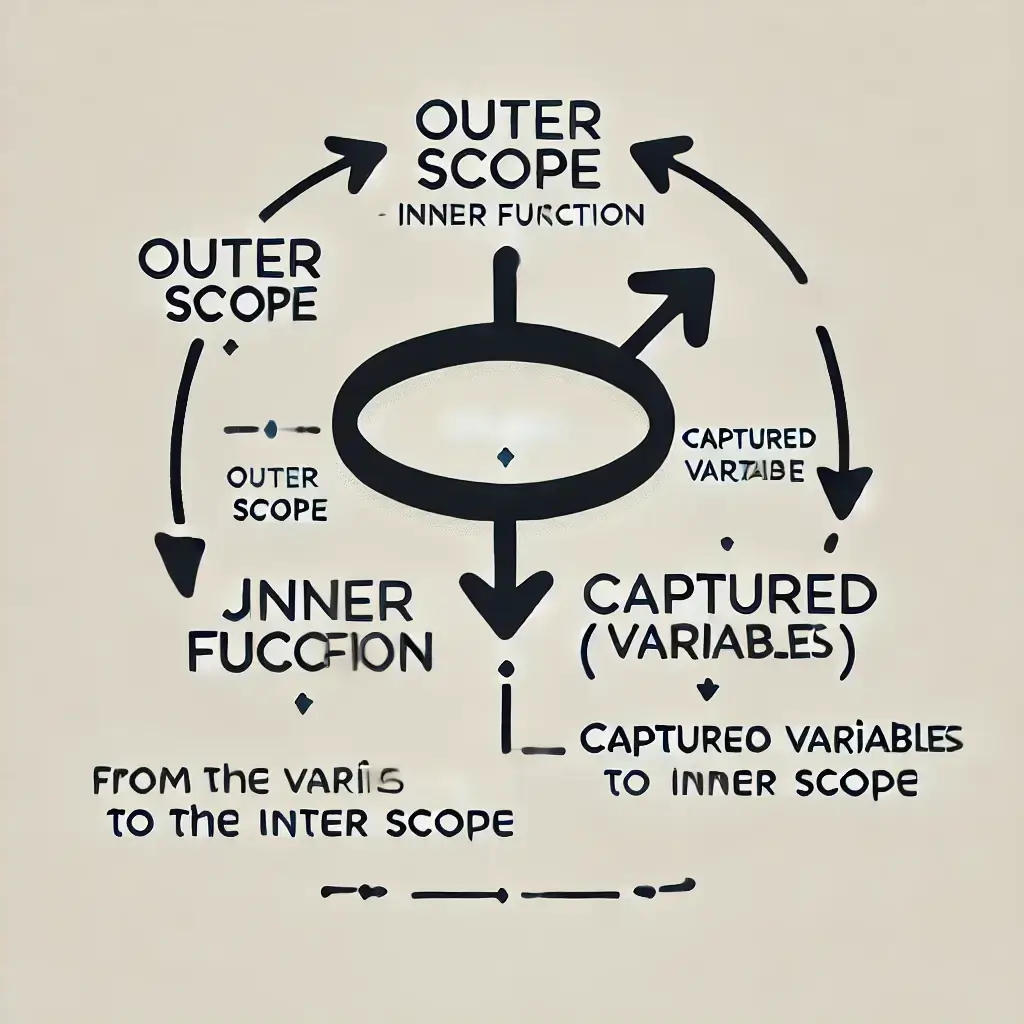
Closures are a powerful feature in JavaScript that allow functions to retain access to their lexical scope even when executed outside their original context. This concept is essential for creating private variables, implementing partial applications, and more.
In JavaScript, **closures** enable functions to access variables from an outer function scope even after the outer function has finished executing. This capability is fundamental to many JavaScript patterns, including module creation, function factories, and maintaining state in asynchronous operations.
Understanding closures is vital for writing efficient and effective JavaScript code. This article explores what closures are, how they work, and practical examples of their usage in real-world scenarios.
Closures are the foundation for powerful abstractions in JavaScript, enabling developers to write more modular and maintainable code.- JavaScript Architect
What Are Closures in JavaScript?
A **closure** is created when a function retains access to its lexical scope, even when that function is executed outside its original scope. This means that the inner function can remember and access variables from the outer function's scope chain.
Closures are made possible by JavaScript's lexical scoping, where the scope of variables is determined by their physical placement in the code. This allows inner functions to access variables defined in their outer functions.
How Do Closures Work?
When a function is defined inside another function, the inner function forms a closure. This closure includes references to the outer function's variables. Even after the outer function has executed and returned, the inner function retains access to those variables.
This mechanism allows for powerful programming patterns, such as data encapsulation and function factories, where functions can be dynamically created with specific behaviors based on their lexical environment.
Common Pitfalls with Closures
While closures are incredibly powerful, they can also lead to unintended consequences if not used carefully. One common issue is **memory leaks**, where closures prevent garbage collection by maintaining references to large objects. To avoid this, ensure that closures do not unintentionally hold onto unnecessary variables.
Another pitfall is the **unexpected behavior of variables within loops**. When using closures inside loops, it's important to create a new scope for each iteration to prevent all closures from referencing the same variable. This can be achieved using `let` instead of `var` or by using immediately invoked function expressions (IIFEs).
Key Benefits of Using Closures:
- Encapsulation of private variables, preventing external access and modification.
- Creation of function factories that generate specialized functions on the fly.
- Maintaining state in asynchronous operations, such as callbacks and event handlers.
- Implementing partial applications and currying for more flexible function usage.
Practical Uses of Closures:
1 - Creating Private Variables:
2 - Function Factories:
3 - Maintaining State in Asynchronous Operations:

Ahmed Hamada
A JavaScript enthusiast who loves exploring different patterns and techniques to improve code efficiency.


