Understanding JavaScript Execution: Call Stack, Event Loop, Tasks, and More
20, October 2024 - By Admin
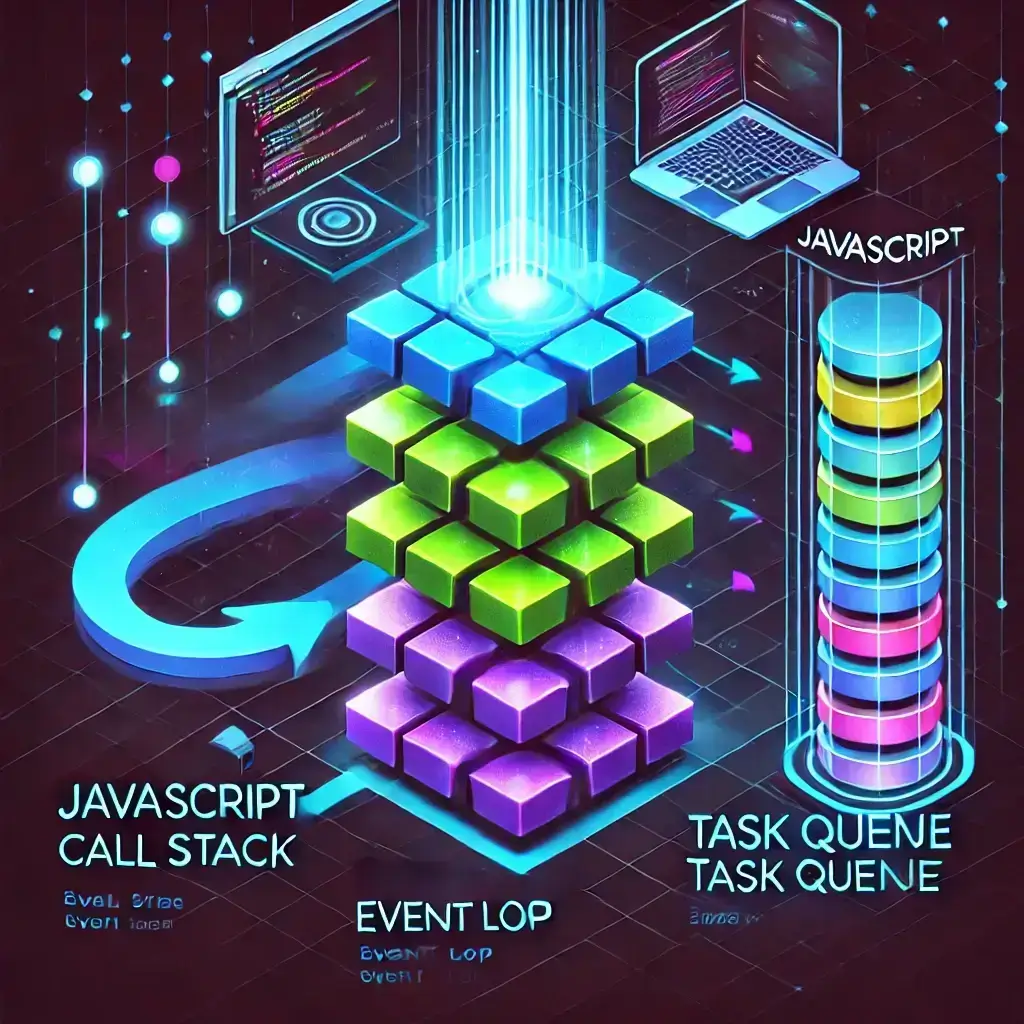
JavaScript is a single-threaded language, meaning it can only execute one task at a time. However, it can handle both synchronous and asynchronous operations with the help of tools like the Call Stack, Event Loop, and Task Queues. Understanding these concepts is crucial for efficient coding.
JavaScript is often described as a single-threaded language. This means that it can only handle one operation at a time. Despite this limitation, JavaScript efficiently manages both synchronous and asynchronous tasks through powerful mechanisms like the **Call Stack**, **Event Loop**, and **Task Queue**. In this article, we will break down these core concepts and explain how they work together to handle operations in JavaScript.
The Call Stack, Event Loop, and Task Queue are essential for understanding asynchronous programming in JavaScript.- JS Expert
What is the Call Stack in JavaScript?
The **Call Stack** is a Last-In-First-Out (LIFO) data structure that tracks the execution of function calls in JavaScript. Whenever a function is invoked, it is added to the Call Stack. The function remains there until it completes execution and is then removed.
The Call Stack handles all synchronous code in JavaScript. If a function calls another function, the new function is added to the top of the Call Stack. Once a function finishes executing, it is popped off the stack, and the program resumes the previous function.
Event Loop and Task Queues Explained
The **Event Loop** is the process that ensures JavaScript handles asynchronous tasks. It constantly checks the Call Stack and the Task Queue. If the Call Stack is empty, it pulls a task from the Queue and pushes it onto the stack for execution.
JavaScript divides tasks into two categories: **Macrotasks** and **Microtasks**. Macrotasks include operations like `setTimeout`, while Microtasks include `Promises`. Microtasks have higher priority, meaning they will be processed before Macrotasks, even if both are ready.
Key Concepts of JavaScript Execution:
- The **Call Stack** handles synchronous code execution.
- The **Event Loop** checks if the Call Stack is empty and processes tasks from the Task Queue.
- Tasks are split into **Macrotasks** (like `setTimeout`) and **Microtasks** (like `Promises`).
- Microtasks have higher priority than Macrotasks.
JavaScript Execution Model:
1 - When a function is called, it is pushed onto the Call Stack.
2 - If the function calls another function, the new function is pushed onto the stack.
3 - When the Call Stack is empty, the Event Loop checks the Task Queue to push any pending tasks.

Ahmed Hamada
A JavaScript enthusiast who loves exploring different patterns and techniques to improve code efficiency.


